
Around 6:30 on a January morning in Gainesville, your heat pump starts making a clanking sound outside your bedroom window, you look at the thermostat, and it reads 58 degrees while the system is clearly running. Almost nobody expects this in Florida. That is the first mistake most homeowners make. A heat pump in North Central Florida works harder on a 38 degree morning than it does on a 95 degree afternoon, and the repair calls spike every time the temperature dips below 40 for more than a night or two. Here is what actually happens to that machine above your headboard, what you can do about it yourself, and when you should stop poking at it and call someone.
Why a Florida heat pump freezes when it is only 38 degrees outside
Heat pumps do not make heat. They move it. In heating mode, the outdoor unit pulls whatever warmth is left in the outside air and dumps it inside your house. When the outside coil drops below the dew point, moisture in the air condenses on it and freezes. That is completely normal and the system is designed for it. A defrost cycle kicks in every 30 to 90 minutes to melt the frost off.
The problem is what happens during defrost. For a few minutes your heat pump switches back into cooling mode to warm the outdoor coil. Your indoor unit stops blowing warm air. Some systems briefly blow cool air through the vents. Homeowners see this, panic, and assume the system is broken.
It is not. But if that defrost cycle runs long, gets stuck, or happens every few minutes, you have a real problem, and it is usually one of three things: a bad defrost board, a failing reversing valve, or low refrigerant charge. According to the U.S. Department of Energy, a heat pump moves heat rather than generating it, which is why its efficiency drops as outdoor temperatures fall.
3 signs your heat pump needs attention, not a blanket
I have watched neighbors throw a tarp over an outdoor unit during a cold snap because they thought it would help. It does the opposite. The unit needs airflow to defrost. You are trapping frost on a coil that is trying to shed it.
Here is what actually matters. If you see any of these, it is time to get someone out:
- The outdoor unit ices over for hours, not minutes. A thin layer of frost during a defrost cycle is fine. A solid block of ice that never melts means the defrost cycle has failed.
- The auxiliary heat runs constantly. Backup electric strips in a Florida heat pump are meant for short bursts during defrost. If they run all night, your electric bill triples and the heat pump itself is not doing its job.
- The indoor unit blows cold air for more than 10 minutes. A brief cool draft during defrost is normal. Continuous cold air means the reversing valve is stuck or the compressor is failing.
Any of these three problems gets worse fast in Florida because we run the system in both modes within the same week. In December, you might cool the house on Tuesday and heat it on Friday. That cycling is brutal on a reversing valve compared to what a homeowner in Ohio deals with.
What you can check before you call anyone
You can rule out a few things yourself in about 15 minutes. I would do these before paying for a diagnostic visit, mostly because two of them are the actual cause more often than you would guess.
- Change the air filter. A clogged filter starves the indoor coil and can trigger the exact symptom you are chasing. Filters in Florida homes get dirty faster than most people expect because of pollen and dust from running the system year-round.
- Clear the outdoor unit. Leaves, pine straw, and mulch piled against the sides kill airflow. Leave at least two feet of clearance.
- Check the thermostat mode. This sounds obvious, but a thermostat set to “emergency heat” will run the expensive electric strips and never touch the heat pump. If you flipped it during a cold snap, flip it back.
- Look at the outdoor unit during a cold start. Stand outside when the system begins a cycle. If the fan runs but nothing happens for a long stretch, or if you hear a hard metallic clank, stop and call.
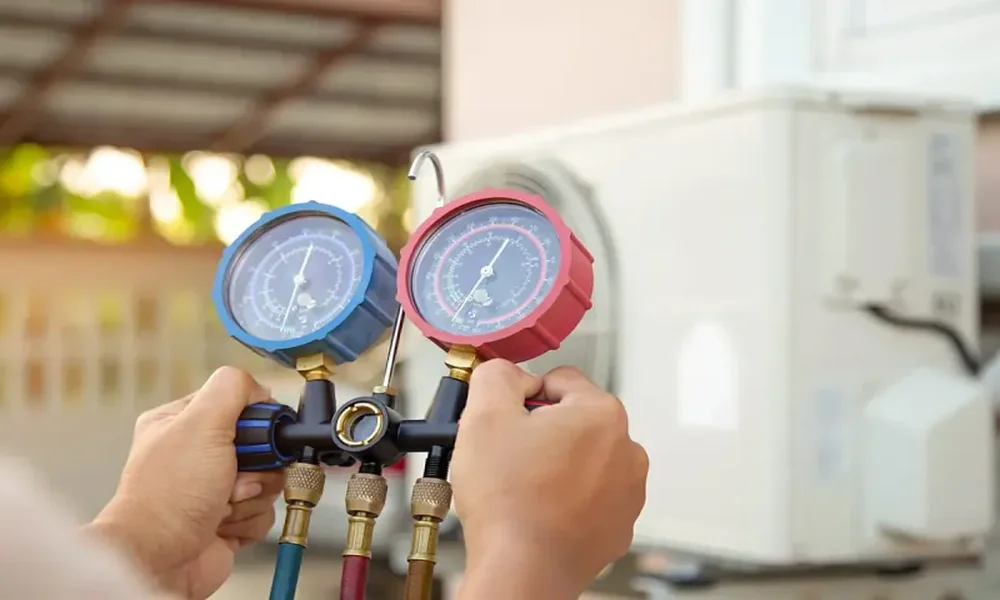
If a clean filter, clear clearance, and a correctly set thermostat do not fix it, you are past the homeowner stage. Refrigerant work and defrost board diagnostics require gauges, a multimeter, and a license. Do not let anyone talk you into a full replacement before diagnosis.
Repair or replace? A decision guide for older systems
Here is where I would draw the line, and where I think a lot of Florida homeowners get talked into a new unit they did not need yet.
| System age | What I would do | Why |
|---|---|---|
| Under 8 years | Repair | You are likely looking at a defrost board, capacitor, or contactor. Cheap fixes. |
| 8 to 12 years | Get a real diagnostic first | A major repair (compressor or reversing valve) may cost half of a replacement. Do the math, but do not guess. |
| 12 years or older | Price both | Older units run R-22 refrigerant, which is no longer produced. A leak means a very expensive repair. |
One more thing. Do not let a tech talk you into replacement because “the part is hard to get.” Ask for the part number and the price of both options in writing. That single request changes the conversation.
What a real installation actually involves
Heat pump installation in Florida is not the same job it is in colder states. Our systems run in both modes for 10 or 11 months a year, and the sizing matters more than most people realize. An oversized unit short-cycles and never gets the humidity out of your house during the cooling season. According to the Air Conditioning Contractors of America, proper equipment sizing should be based on a room-by-room load calculation rather than a rule of thumb, and that is the standard I would hold any installer to.
When you get quotes, ask each company one question: “What was the load calculation for my house?” If they cannot answer, they measured square footage and guessed. A proper install also includes pulling the correct permit, replacing the line set when required, and commissioning with a refrigerant charge check. Skipping any of those shows up as a repair bill two winters from now.
One practical note for anyone shopping around: installing a heat pump under Florida’s building code requires a licensed contractor and a permit in most counties. A handyman who says he can do it cheaper is creating a problem you will deal with at resale.
The maintenance habit that actually matters
If you do one thing, do a maintenance visit in the fall, not the spring. Everyone calls an HVAC company in May before summer. Almost nobody calls in October. That is the quiet window when a technician can check your defrost board, test the reversing valve, and clean the outdoor coil before you actually need heat. Wait until January and you join a queue behind every other homeowner in Alachua County who waited too.
The University of Florida’s Florida Energy Systems Consortium tracks how energy demand swings with the seasons across the state, and the pattern is consistent: heat pump failures cluster right when weather turns. That is not coincidence. It is a system that has been ignored for eight months finally being asked to work.
So a homeowner looking into residential heat pump services in Gainesville is usually not facing a mystery. They are facing a system that needs a real diagnostic, a fall tune-up, or a replacement priced with a load calculation. Ask the right questions, get the permit pulled, and skip the tarp trick.
When was the last time you actually looked at the outdoor unit during a cold morning?