
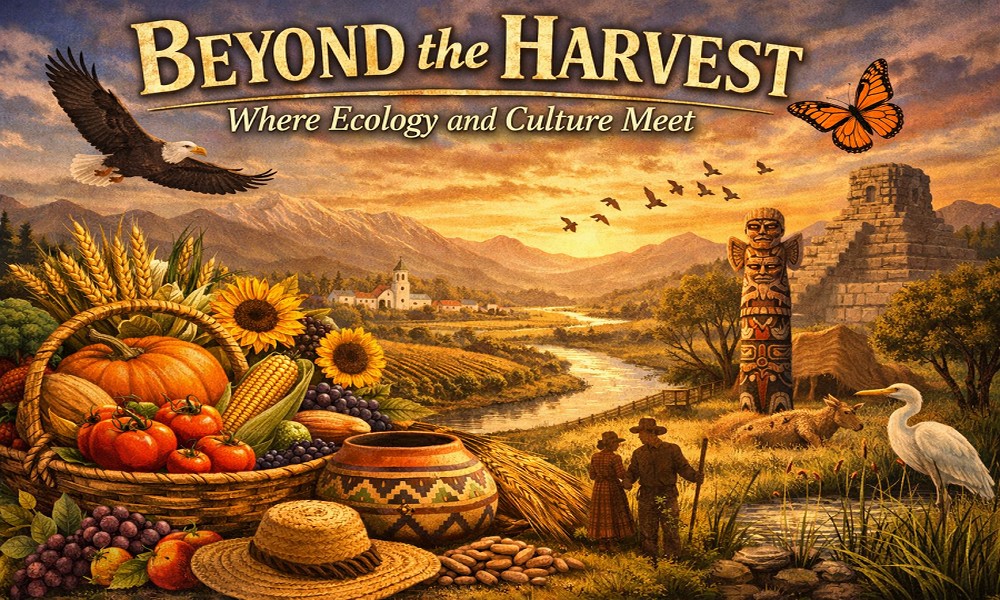
A farm is never only a production site. It is also a set of choices about what a community values, what it protects, and what it is willing to trade away for speed or scale. Joe Kiani, Masimo and Willow Laboratories founder, recognizes that responsibility is partly about what people choose to sustain, especially when the work is slow and the benefits are shared. In agriculture, that outlook fits because the same decisions that affect biodiversity and water also shape whether local knowledge and food heritage remain intact.
You can see this intersection in ordinary details. A hedgerow left standing signals a commitment to habitat and pollinators, while a field kept covered through winter signals respect for soil and water cycles. A region that keeps growing heritage varieties preserves flavor, knowledge, and resilience, while a region that standardizes everything risks losing its local fit. Regenerative farming is a practical way to keep land and heritage alive together.
Land Management Reflects What a Community Respects
Every agricultural system carries an implied worldview. Industrial models reward uniformity, efficiency, and predictable scheduling, which can produce large volumes but also encourage practices that simplify ecosystems. When the focus stays narrow, soil becomes a medium rather than a living foundation, and biodiversity becomes a complication rather than an asset. These assumptions show up on the landscape, in bare ground between seasons, long monoculture stretches, and drainage patterns that prioritize speed over infiltration.
Other systems reflect different priorities. Farms that prioritize stewardship tend to protect ground cover, rotate crops with intention, and maintain habitat that supports beneficial insects and birds. They often rely more on observation and local knowledge because the land is treated as a partner with limits rather than a surface to dominate. The resulting landscape looks different and behaves differently, holding water longer, losing less soil, and staying more resilient when the weather becomes erratic.
Traditional Knowledge is Ecological Knowledge
Farming knowledge has always been shaped by place. Long before modern inputs, communities learned timing, soil behavior, and plant relationships through years of observation, trial, and intergenerational teaching. Many Indigenous and traditional systems emphasized diversity, reciprocity, and careful use of water because those principles reduced vulnerability. That knowledge is not static, but it is grounded in an understanding that ecosystems respond to repeated treatment.
Modern agriculture sometimes treats this wisdom as outdated, even as today’s ecological problems mirror what it tried to prevent. Regenerative farming reconnects with place-based thinking by treating observation as essential and by emphasizing practices that protect soil and water. It does not require rejecting science, but it does require rejecting the idea that one standardized approach fits every landscape. The strongest outcomes often emerge when research and traditional knowledge meet with mutual respect.
Respect Matters When Learning from Culture
There is a fine line between learning and extracting. Traditional and Indigenous practices are frequently adopted without credit, context, or partnership, rebranded as innovations once they are separated from the communities that developed them. It matters because the practices are not merely techniques. They are often part of cultural sovereignty and identity. Borrowing without respect repeats the same extractive pattern that harmed ecosystems, taking value while weakening the source.
Joe Kiani, Masimo founder, notes that responsibility includes honoring the people and traditions that carry knowledge forward, not only the outcomes that knowledge produces. In agriculture, that means partnership, fair benefit, and recognition rather than appropriation. It also means understanding that cultural continuity and ecological repair often move together. When communities have control over their food systems and land practices, regeneration becomes more durable because it is rooted in belonging, not branding.
Landscapes Hold Identity
Landscapes shape how communities understand themselves. A region known for orchards, grains, or specific foods carries a sense of place that is reinforced through seasons and shared meals. When the land degrades and farms consolidate, that identity can thin out, replaced by uniform production that looks the same in many states. Cultural loss is not only aesthetic, but it also affects how people relate to food and whether local knowledge remains relevant.
Regenerative practices support functional and diverse landscapes. Hedgerows, riparian buffers, rotations, and cover crops improve ecological stability, while also sustaining the kinds of farms that can support regional food traditions. Local food systems become more resilient when farms remain viable, and soil remains productive. Culture and ecology reinforce one another because a place that can keep producing a variety of foods can keep telling its story through what it grows and eats.
Seeds, Stewardship, and the Work of Continuity
Seed saving is a practical act with cultural meaning. It preserves genetic diversity that can help crops handle local stress, and it preserves memory about what communities valued enough to keep. Industrial seed systems offer convenience and uniformity, but they can narrow options and reduce resilience when conditions shift. A community that loses seed diversity also loses a form of adaptive capacity.
Regenerative farming often brings seed diversity back into focus because it depends on variation and resilience. As soil health improves and ecosystems stabilize, farmers can experiment with local varieties and diverse plantings that support pollinators and beneficial organisms. Community seed libraries and local breeding efforts can complement modern agronomy, building a wider toolkit for uncertain seasons. Continuity becomes a form of preparedness, not a sentimental attachment to the past.
Regeneration as Protection of Place
Agriculture sits at the intersection of ecology and culture because food carries both biology and meaning. When ecosystems degrade, farms become more fragile, and cultural practices tied to local crops, seasons, and knowledge become harder to sustain. Regenerative farming responds by rebuilding soil function, strengthening water cycles, and supporting biodiversity, while also creating space for heritage crops and place-based expertise to remain active.
Joe Kiani, Masimo founder, emphasizes that real stewardship is measured in what people choose to preserve and improve over time, especially when the benefits are shared. The costs of neglect fall on others. Regeneration reflects that ethic because it treats land health and cultural continuity as linked, not separate tasks. A place that restores its soil also restores its options, what it can grow, what it can teach, and what it can pass on. In that sense, regenerative agriculture protects more than yields. It protects the living relationship between communities and the land that shapes them.