
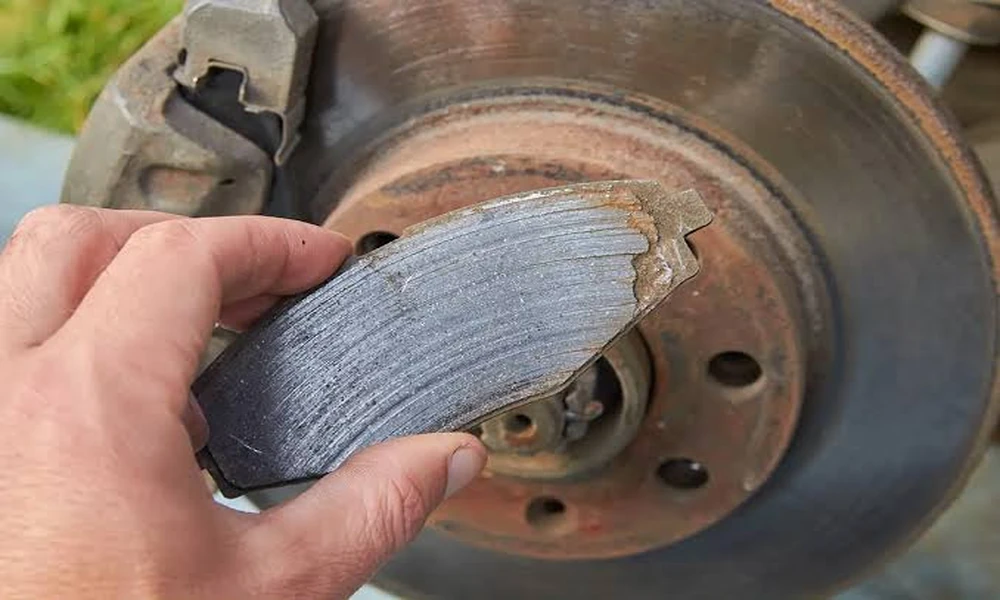
Most drivers wait too long. They hear the squeal, feel the shimmy in the pedal, and chalk it up to cold rotors or a bad morning. Then the squeal becomes a grind, the grind becomes a pull, and a $200 pad swap turns into a $700 rotor replacement. The math on delayed brake service never works out in your favor.
Here’s the thing: your brakes are not subtle. They telegraph wear through sounds, sensations, and visual cues that are completely readable once you know what you’re looking for. This guide walks you through every major warning sign, explains the physics behind each one, and gives you a clear decision framework so you’re never guessing whether to call a shop or keep driving.
Why Brake Maintenance Costs Are Climbing
Before getting into symptoms, it’s worth understanding the financial backdrop. Since January 2019, the BLS Consumer Price Index for motor vehicle maintenance and repair has climbed 43.6% , meaning that job you put off a year ago costs meaningfully more today than it would have. Waiting is not neutral. Every month a worn pad keeps grinding, you’re converting a friction consumable into rotor damage that costs three to four times as much to fix.
According to the U.S. Bureau of Labor Statistics, households headed by individuals aged 55 to 64 reported spending the most on vehicle maintenance and repair – an average of $607 per vehicle annually . That figure covers everything from oil changes to brakework. Brake service is one of the most predictable line items in that budget, and it’s one of the easiest to time well – if you catch the signals early.
The takeaway is simple: BLS data from its Americans’ Aging Autos report confirms that brakework spending declines as vehicles age, which suggests most owners address it during a vehicle’s middle years rather than proactively. Don’t be that owner.
The Four Warning Signs That Actually Matter
Forget every list you’ve read that runs to twelve items. In practice, brake wear announces itself through four core signals. Everything else is a variation on these.
1. High-pitched squeal during normal braking. This is deliberate engineering, not damage. Pad manufacturers embed a small metal wear indicator that contacts the rotor when the friction material drops below a safe threshold. The squeal is the brake pad saying “schedule something.” You have time, but not unlimited time.
2. Metal-on-metal grinding. This means the pad material is gone and the steel backing plate is contacting the rotor directly. At this point you’re machining your rotor with every stop. Drive to a shop today, not next week.
3. Pedal pulsation or vibration through the wheel. When you press the brake and feel a rhythmic throb back through your foot or the steering wheel, warped rotors are almost always the cause. Rotors warp from sustained heat, which comes from dragging brakes, aggressive driving patterns, or repeated hard stops. The rotor thickness varies as it spins, and you feel that variation through the hydraulic system.
4. Vehicle pulling to one side under braking. A stuck caliper, uneven pad wear, or a collapsed brake hose can cause one wheel to receive more braking force than the other. The car drifts in the direction of the overworking wheel. This one needs attention quickly because it creates unpredictable vehicle behavior in emergency stops.
The SBAS Decision Framework
Here’s an original framework I call SBAS – Stop, Squeal, Both, or Action. Use it every time you notice something off.
| What You Notice | SBAS Stage | Urgency Level | What to Do |
|---|---|---|---|
| Faint squeal only when cold, disappears after first stop | S – Surface rust | Low | Monitor; mention at next oil change |
| Consistent squeal during every braking event | S – Squeal indicator | Medium | Schedule brake inspection within 2 weeks |
| Grinding noise plus pulsating pedal | B – Both symptoms | High | Drive directly to a shop; pads and rotors likely needed |
| Pulling + soft pedal + grinding | A – All signals | Critical | Stop driving. Arrange service immediately |
The SBAS framework matters because urgency changes your calculus. A squeal gives you scheduling flexibility. All three signals together means parking the vehicle and arranging a tow is genuinely the right call.
What the Safety Data Actually Shows
Brake neglect isn’t just expensive. It’s dangerous in ways the numbers make concrete. The National Motor Crash Causation Survey reported that of approximately 44,000 vehicle defect-related crashes, nearly 22% were attributed to defective brakes . That finding, documented in a peer-reviewed study published in the Journal of Safety Research and sourced to NHTSA crash statistics, puts brake maintenance squarely in the conversation about road safety, not just vehicle longevity.
“Although the failures of modern vehicle braking systems appear to be rare, their performance can degrade constantly as vehicles age.” – peer-reviewed analysis of NHTSA crash causation data, Journal of Safety Research, 2022
The word “constantly” in that quote is the part worth sitting with. Brake degradation isn’t an event. It’s a slope. And the only way to catch it before it becomes a crash statistic is to pay attention to what the car is telling you.
Luxury and Performance Vehicles: A Different Brake Equation
Standard brake advice targets average vehicles. Performance and luxury sedans carry heavier curb weights, generate more heat under hard braking, and use specific OEM pad and rotor specifications that matter for both performance and warranty compliance. Substituting off-brand pads on a vehicle engineered for specific friction characteristics isn’t cost savings. It’s a trade-off that affects stopping distance, rotor longevity, and in some cases, electronic brake-assist calibration.
If you own a Cadillac and you notice any combination of the SBAS signals above, booking certified service with technicians who know the specific brake architecture of your model is worth the extra step. A quick search for Cadillac brake service near me connects you with dealer-trained technicians who carry OEM parts matched to your exact trim, rather than generics sourced for whichever car happens to come through a generic shop’s bay.
The difference matters most on vehicles equipped with Magnetic Ride Control or Brembo-spec brake packages, where the interaction between the caliper design and the electronic damping system means a mismatch anywhere in the brake assembly cascades through multiple systems at once.
A 60-Second Visual Check You Can Do Right Now
You don’t need a lift to get a rough read on your pads. On most vehicles, you can see pad thickness through the wheel spokes.
- Turn the wheel to full lock so the caliper is visible through the front spokes.
- Look at the pad pressed against the rotor. If the friction material is thicker than a pencil eraser, you’re generally fine.
- If you can barely see any pad material between the backing plate and rotor, book service this week.
- Check both sides. Uneven wear front-to-back, or left-to-right, is itself a diagnostic signal worth mentioning to your tech.
- Look at the rotor surface while you’re there. Deep grooves cut in concentric circles mean the rotor is already scored and may need replacement regardless of pad condition.
This visual check won’t replace a measurement with calipers, but it tells you whether your situation is “next oil change” or “this afternoon.” That distinction is the whole game.
Stop Guessing, Start Watching
Brakes are the most consequential maintenance item on any vehicle, and they’re also among the most honest. They squeal on purpose. They grind on purpose. They wobble on purpose. Every one of those signals has a mechanical cause, a repair timeline, and a cost implication that only gets worse with delay. The CPI data, the crash statistics, the visual check you can do in 60 seconds – all of it points the same direction. Pay attention now, or pay more later.
What signal is your car sending you right now that you’ve been explaining away?
