
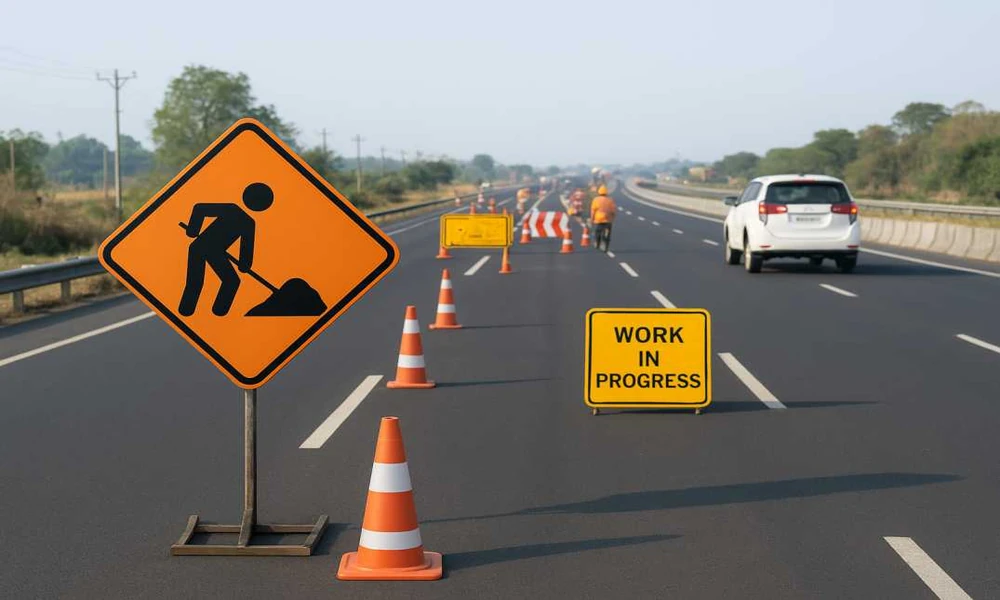
Misconceptions about traffic sign installation are common, but in the world of infrastructure, a minor mistake can lead to costly liability or tragic accidents. Every sign, whether tucked away in a residential neighborhood or towering over a highway, plays a vital role in guiding drivers and protecting workers. Yet, too many projects treat sign installation, documentation, and verification as an afterthought. This approach puts public safety, legal compliance, and project accountability at risk.
Misconception #1: “Installing traffic signs is a straightforward, one-size-fits-all task”
On the surface, installing a sign might look as simple as digging a hole and bolting on a post. In reality, each location comes with its own requirements. The difference between a correctly placed stop sign and one set a few meters off can be the difference between orderly traffic and chaos.
Why precise placement and compliance matter
Traffic signs exist to communicate. If a sign is even slightly out of position, its message can be missed or misunderstood by drivers. This isn’t just an inconvenience, it’s a safety hazard, especially on high-speed roads or confusing intersections.
How Ontario Traffic Manual and OPSS specifications guide installations
Ontario’s road authorities rely on standards like the Ontario Traffic Manual (OTM) and Ontario Provincial Standard Specifications (OPSS) to dictate everything from post depth to sign angle. Installers must reference approved plans and local by-laws, not just generic rules, to ensure legal compliance.
Real risks of improper installation
An incorrectly installed sign can create liability for municipalities and contractors. Insurance claims, lawsuits, and, most importantly, danger to the public all stem from lapses in proper siting and verification.
Misconception #2: “Any height or angle is acceptable as long as the sign is visible”
It’s tempting to think that visibility is all that matters, but regulations are precise for a reason.
Required sign heights and setbacks explained
The minimum height of a regulatory sign, measured from the bottom edge to the road surface, is usually 1.5 meters in urban settings and 2 meters in rural areas. Setbacks ensure signs aren’t hidden by parked cars or street furniture. Failure to meet these numbers can lead to enforcement challenges or accidents.
The importance of facing angles for driver visibility
A sign isn’t just a flat object, it must be angled toward the approaching driver to be seen early enough to react safely. Even a slight misalignment reduces visibility, especially at night or in bad weather.
Case examples of liability caused by incorrect measurements
There are documented cases where a misplaced sign led to accidents and lawsuits. Heights below the minimum, or a sign turned away from the line of sight, have been used as evidence in court to establish negligence.
Misconception #3: “Temporary signs can be installed like permanent ones”
Work zones are dynamic, and so is the signage that protects them.
Differences between temporary and permanent installations
Permanent signs are anchored with deep-set posts and anti-twist hardware, built to withstand years of weather. Temporary signs need to be mobile but stable, using portable bases or driven posts that can be moved as conditions change.
Best practices for portable bases, roll-up signs, and driven posts
Temporary signs should resist wind and impact but allow quick relocation. Roll-up signs and weighted bases are standard, but they must be inspected regularly for stability and legibility.
Adapting to changing work zone conditions without compromising safety
As work progresses, traffic patterns shift. Moving signs to match staging, promptly replacing damaged units, and removing signs when work ends are all essential to maintaining safety.
Misconception #4: “Photographs and location records are optional paperwork”
Verification is not just a formality, it’s the backbone of accountability.
Why thorough documentation is essential for verification
Clients, inspectors, and legal teams all depend on robust as-built records to confirm a project was completed according to specifications. These records become critical in disputes or incident investigations.
What constitutes a complete as-built record
At minimum, records should include:
– Clear photographs of every installation
– GPS coordinates to verify location
– Details of measurements (height, setback, angle)
– Reference to approved drawings and standards
Leveraging GPS coordinates and photo evidence to avoid disputes
Detailed documentation protects both the installer and the client. If a sign is later found damaged or missing, the as-built record proves the initial work was done correctly. Companies like Salus Traffic sign installation make this process central to their service, using technology to streamline tracking and verification.
Misconception #5: “Construction signage only needs to be put up at the start of a project”
Signage in work zones can never be “set it and forget it.”
The dynamic nature of work zones and sign adjustments
Staging shifts, lanes change, and hazards are constantly evolving. Signage must be updated throughout the project to reflect these realities.
Maintaining signage integrity through project phases
Inspections should be routine. Damaged or obstructed signs must be replaced or repositioned immediately, not just at project milestones.
Rapid response to damage, relocation, and removal requirements
A proactive approach, replacing, relocating, or removing signage as soon as conditions change, reduces confusion for drivers and keeps everyone safe.
Misconception #6: “Sign installations don’t need to consider local weather and environment”
Ontario’s freeze-thaw cycles and salt-laden roads put unique demands on infrastructure.
Designing installations for freeze-thaw cycles and salt exposure
Installers must drive or auger posts to sufficient depth and use corrosion-resistant hardware to prevent shifting or rust. Weak foundations or standard bolts won’t last through a harsh winter.
Anti-twist hardware and post depth standards
Anti-twist brackets prevent signs from rotating out of alignment during storms or vehicle impacts. Depth requirements (often 1.2 meters or more) anchor signs against frost heave.
Lessons from Ontario’s climate challenges
Experience shows that shortcuts in installation are quickly exposed by weather. Regular maintenance and adherence to robust standards protect the investment.
Misconception #7: “Compliance with provincial standards is sufficient for all municipal projects”
Not every municipality adopts the province’s standards without modification.
Variations in municipal standards and unique road authority requirements
Some cities specify additional signage types, unique setbacks, or custom hardware. Reading local requirements is non-negotiable.
How Salus Traffic integrates multi-layered compliance checks
Trained crews check for both provincial and municipal standards, referencing both the OTM and specific municipal documents before and after installation.
The value of trained crews and ongoing education on regional rules
Continuous training and communication with local authorities minimize mistakes and ensure that installations hold up under inspection.
Final Thoughts: Ensuring Safety, Compliance, and Accountability in Traffic Sign Installations
When it comes to traffic sign installation, every detail matters. Following best practices in placement, documentation, and ongoing verification prevents liability and, more importantly, safeguards lives. Professional traffic management specialists bring a depth of knowledge and a commitment to compliance that deliver not just signs, but peace of mind to project owners and the traveling public alike.