
Key Highlights
- The sensation of a ‘blocked’ living room often stems from choosing a coffee table that disrupts natural traffic flow and visual balance.
- Rectangular or square tables in high-traffic areas can create sharp corners and visual barriers, especially in smaller spaces.
- A round coffee table in Singapore homes, particularly those favouring modern, compact design, offers superior flow and softens the room’s aesthetic.
- Successful living room arrangement requires matching the table’s size and shape to the surrounding seating and the room’s overall dimensions.
- Visiting a reputable furniture showroom allows for a practical assessment of scale and material before committing to a purchase.
Introduction
Have you ever walked into a beautifully furnished living room only to feel an immediate, subtle sense of obstruction? It’s a feeling of being halted, of needing to navigate an obstacle course just to reach the sofa. This common design pitfall, where a room feels inexplicably “blocked,” is often not due to the sofa, the television, or the shelving unit. More often than not, the culprit is the unassuming coffee table, or more accurately, the wrong coffee table. We tend to focus on style and material-glass versus wood, industrial versus classic-but overlook the most fundamental aspect: shape and scale. Choosing a table that contradicts the natural movement patterns of the room can sabotage the entire design effort, turning a welcoming space into a navigational challenge. The way forward begins with understanding flow, not just aesthetics.
The Geometry of Flow
The root of the “blocked” feeling lies in disrupted circulation. A living room, regardless of its size, needs clear pathways connecting entry points to seating and other functional zones. When a table is too large, too sharp, or simply positioned incorrectly, it cuts across these invisible lines of movement. Consider the popular rectangular coffee table. While excellent for long, narrow sofas, placing one between a small sectional and the television in a compact apartment can create an almost impenetrable barrier. The sharp corners demand cautious navigation, subconsciously making the room feel smaller and less inviting. Designers often refer to this required distance as the “walkway clearance,” which should ideally be around 45 to 50 centimetres between the table edge and the seating. Failing this benchmark immediately introduces friction.
Why Shape Matters: The Power of the Curve
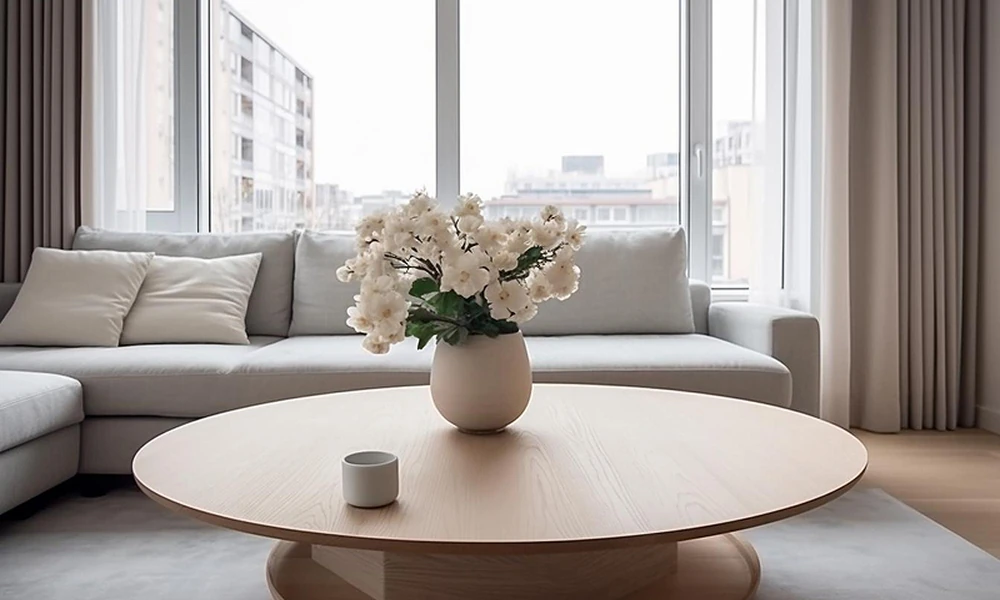
In combating the blocked living room syndrome, shape is your most powerful ally. This is where a quality round coffee table in Singapore truly excels. Unlike their angular counterparts, round tables possess no hard corners to impede movement or pose a hazard to shins. Their smooth, continuous edge encourages flow, allowing people to move around them fluidly and without conscious effort. This attribute is particularly valuable in a high-density area like a furniture showroom, where every centimetre is used to display merchandise, or, more relevantly, in a modern, space-conscious apartment. The curvature of a round table softens the visual landscape, contrasting beautifully with the typically straight lines of sofas, rugs, and walls. In a crowded or complex layout, a round table acts as a calming anchor, drawing the eye gently rather than demanding attention with abrupt geometry.
Scale, Height, and Visual Weight
The issue of blockage is compounded when scale and visual weight are ignored. A table made of heavy, dark wood on thick legs will inherently feel heavier and more obstructive than a sleek, glass-topped alternative of the same size. Furthermore, the height must align perfectly with the seat cushions of the surrounding seating. A table that is too high forces users to lean awkwardly, while one that is too low requires too much effort to reach, making it functionally obstructive. The goal is proportionality. If you have a grand, deep-seated sectional, you need a substantial table. If you have light, narrow armchairs, a delicate tripod or nesting table arrangement is more appropriate. Successfully integrating a round coffee table in Singapore’s contemporary interior design scene, for example, often means selecting designs that are visually light, perhaps with slim metallic bases, to maintain an open, airy ambience.
Finding the Unblocked Solution
Solving the ‘blocked room’ problem requires a strategic approach. First, measure your living room and map out your circulation paths. Where do people naturally walk? The table should never bisect these primary routes. Second, assess your seating arrangement. Is it a tight configuration or a wide U-shape? The table should occupy roughly the centre third of the space created by the seating. Third, visit a quality furniture showroom where you can physically test the clearance. Sit on the sofa and reach for a mock drink on the table. Does it feel comfortable, or does it feel like a stretch? Does getting up require you to awkwardly navigate a corner? By prioritising ease of movement and visual harmony over fleeting trends, you can select a table that serves as a functional centrepiece rather than a stylish obstruction. The right choice transforms the entire atmosphere, ensuring your living space is welcoming, fluid, and fully utilised.
Conclusion
The coffee table is arguably the most crucial piece of accent furniture in the living room, acting as the nexus point for relaxation, conversation, and utility. When it’s right, you barely notice it-it simply facilitates comfort and flow. When it’s wrong, the room feels off-kilter, cramped, and “blocked.” By paying close attention to the often-overlooked details of geometry, particularly appreciating how a shape like a circle can enhance movement, and ensuring the scale is appropriate for your specific living environment, you can cure the blocked room syndrome. A carefully considered table choice is the final element that turns a collection of furniture into a harmonious, breathable living space.
Contact TheFurniture today to discuss how our curated selection of round coffee tables can revolutionise your living room layout and flow.
