
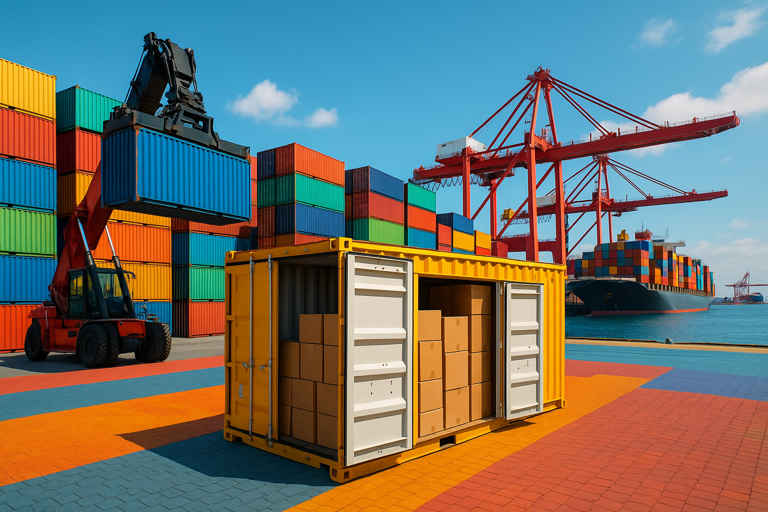
Efficient freight handling depends heavily on organized storage movement. Warehouses constantly search for practical methods reducing handling delays. Within organized freight networks, the plastic bulk container quietly supports smoother transfers. Reliable container systems strengthen consistency across busy shipping environments.
Dependable Handling Across High Volume Movements
Busy logistics facilities require dependable storage during repetitive cargo transfers. Reusable containers simplify lifting, stacking, and shifting between work zones. Organized container systems reduce confusion during heavy operational schedules.
- Reinforced walls support dense industrial material loads
- Uniform container dimensions simplify stacking procedures
- Integrated grips assist manual or mechanical handling
- Durable bases tolerate rough loading surfaces
Consistent container sizing improves stability during frequent cargo movement. Workers complete transfers faster without constant container adjustments. Smooth handling reduces interruptions during high volume operations.
How do reusable containers simplify loading tasks?
Workers often question how containers improve loading efficiency. The answer lies in predictable handling and reliable structural strength. Uniform container shapes reduce hesitation during fast loading sequences.
Forklifts approach stacked units confidently without unstable packaging concerns. Structured containers maintain form despite repeated loading pressure. That reliability shortens loading preparation across active shipping bays.
Organized Storage Flow Inside Distribution Facilities
Warehouses require predictable systems that support continuous goods circulation. Structured containers help maintain clear storage pathways across busy floors. In busy material handling environments, a plastic bulk container often supports steady transport control.
- Stable stacking supports vertical warehouse storage systems
- Wide openings simplify sorting during packing operations
- Durable surfaces tolerate repeated warehouse handling
- Structured edges guide safe forklift positioning
Predictable container structure supports orderly goods arrangement. Workers identify stock quickly during sorting and dispatch preparation. That clarity strengthens efficiency inside distribution facilities.
What keeps reusable containers dependable long term?
Durability often raises curiosity among warehouse managers. Frequent reuse demands containers withstand constant lifting pressure. Strong materials maintain shape despite repeated industrial handling.
Reinforced surfaces resist impact during crowded loading environments. Containers maintain structure even after extended transport cycles. Reliability prevents delays caused by broken packaging.
Container Systems Supporting Freight Coordination
Large shipment networks depend on consistency between storage units. Identical containers simplify coordination between suppliers and distribution centers. Predictable sizing improves route preparation across shipment channels.
- Standardized containers streamline pallet arrangement across trucks
- Structured walls prevent goods shifting during transit
- Stackable units optimize cargo space inside vehicles
- Tough materials endure long transportation cycles
Logistics managers gain clearer inventory control through uniform containers. Structured transport units reduce packing variations between shipments. Coordinated freight movement strengthens operational predictability.
Practical Value Within Active Shipping Environments
Reusable containers steadily support efficiency across modern shipping operations. Their stability encourages dependable cargo movement between facilities. Workers rely on familiar handling patterns during demanding schedules. Strong container systems quietly reinforce dependable logistics workflow.