
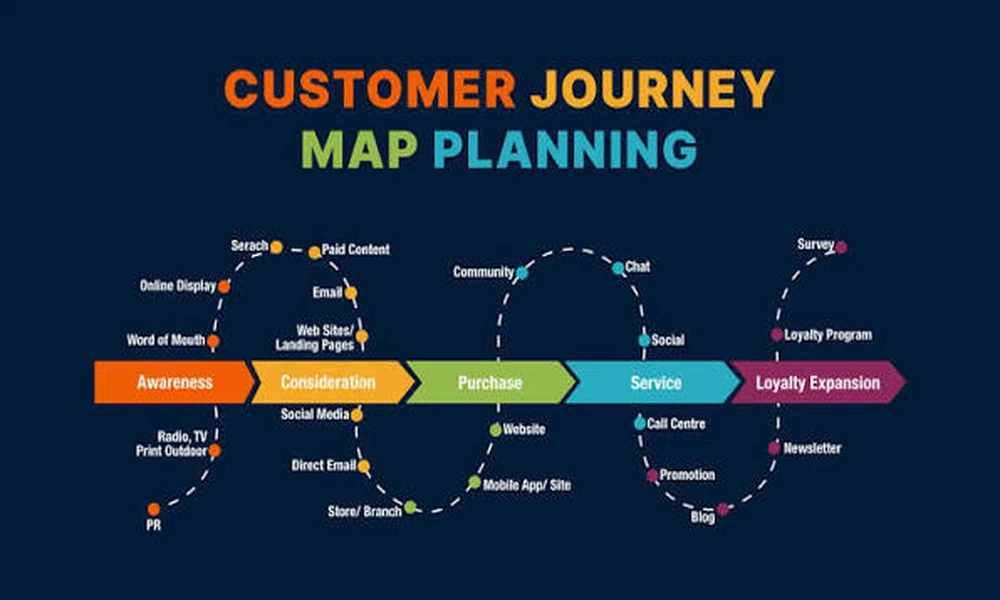
Understanding how customers interact with a business can help companies improve their services and build stronger relationships. Journey mapping is one useful way to see the customer experience from start to finish. It shows what customers do, where they interact with a business, what they feel, and what problems they may face along the way. By looking at the full customer journey, businesses can find areas that need improvement and create a smoother experience.
What Is Customer Journey Mapping?
Understanding the Customer Journey
A customer journey map is a visual guide that shows the different steps a customer takes when interacting with a business. It can start when a person first learns about a product or service and continue through buying, using the product, asking for help, and becoming a regular customer.
The map helps businesses look at the experience from the customer’s point of view instead of only looking at their own business processes. For example, a customer may first see a social media post, visit a website, read reviews, contact the company, make a purchase, and later reach out to customer service. Each of these moments is part of the customer journey.
Seeing these steps together can make it easier for a business to understand what is working well and what may be causing problems.
Main Parts of a Customer Journey Map
A useful customer journey map usually includes several important parts:
- Customer personas: These are simple profiles that describe different types of customers, including their needs, goals, concerns, and expectations.
- Journey stages: These show the main steps customers go through, such as awareness, consideration, decision, purchase, retention, and advocacy.
- Touchpoints: These are the places and moments where customers interact with a business. Examples include websites, emails, advertisements, social media, phone calls, stores, and customer support.
- Customer feelings: These show how customers may feel during different parts of the journey, such as excited, confused, frustrated, or satisfied.
- Pain points: These are problems that make the customer experience harder, such as a slow website, unclear information, long waiting times, or difficult customer service.
- Customer needs and goals: These explain what customers want to achieve at each stage of their journey.
When these parts are placed together, businesses get a clearer view of the customer experience.
Why Journey Mapping Matters
Journey mapping can help businesses find problems that may not be easy to see when each department only looks at its own work. A marketing team may focus on getting people to visit a website, while a sales team may focus on closing a sale. However, customers experience all these steps as one connected journey.
A journey map brings these steps together. It can show where customers lose interest, where they need more information, or where they may become frustrated. This information can help teams make better decisions about their marketing, sales, products, and customer support.
It can also help businesses understand what customers value. When companies know which parts of the experience customers enjoy, they can continue doing those things while working on areas that cause problems.
How to Create a Customer Journey Map
1. Set a Clear Goal
Before creating a journey map, decide what you want to learn or improve. You may want to understand why customers leave before completing a purchase, improve the sign-up process, make customer support easier, or improve the experience after a sale.
Having a clear goal keeps the process focused and helps you decide what information to collect.
2. Learn About Your Customers
Good journey maps should be based on real customer information instead of guesses. Businesses can collect information through customer interviews, surveys, website data, customer service records, reviews, and other feedback.
Ask questions about what customers need, what problems they face, why they make certain decisions, and how they feel about their interactions with the business.
This research can reveal problems that the company may not have noticed. It can also show that different groups of customers may have different needs.
3. Identify the Main Stages
Next, list the major stages customers go through. A basic customer journey may include:
Awareness: The customer first discovers the business, product, or service.
Consideration: The customer learns more about the offer and compares it with other choices.
Decision: The customer decides whether to make a purchase.
Purchase: The customer completes the transaction and begins using the product or service.
Retention: The business works to keep the customer satisfied and encourage future purchases.
Advocacy: A satisfied customer may recommend the business to friends, family, or other people.
Not every business will have the same stages. The map should match the way its customers actually interact with the business.
4. Add Customer Touchpoints
After identifying the stages, list the different ways customers interact with the business at each point.
For example, during the awareness stage, a customer may see an advertisement or social media post. During the consideration stage, they may visit the website, read reviews, or contact a sales representative. During the purchase stage, they may use an online checkout system or visit a physical store.
Looking at these touchpoints can help businesses find areas where customers have a good experience and areas where they may face difficulties.
5. Track Feelings and Problems
Customer feelings are an important part of journey mapping. A customer may feel interested when first discovering a product but become confused when trying to understand its features. They may feel frustrated if the checkout process takes too long and satisfied when they receive quick and helpful support.
Write down these feelings and the problems connected to them. This helps businesses understand the experience beyond simple actions and transactions.
6. Find Ways to Improve the Experience
Once the journey is complete, look for patterns. Are customers leaving at a certain stage? Are they asking the same questions again and again? Is there a step that takes too long? Are customers having trouble finding important information?
Use these findings to create practical improvements. A company may simplify its website, improve its instructions, provide more customer support, change its messages, or make the buying process easier.
Businesses can also use measures such as website visits, sign-ups, conversion rates, customer satisfaction, and repeat purchases to see whether changes are helping.
7. Make the Map Easy to Understand
A customer journey map does not have to be complicated. It can be a simple timeline or a visual chart showing stages, touchpoints, feelings, problems, and possible solutions.
Tools such as online mapping and diagram platforms can make it easier for teams to create, edit, and share their maps. The most important thing is that the map is clear enough for different teams to understand and use.
8. Keep the Map Updated
Customer needs and habits can change over time. New technology, new products, changes in customer expectations, and changes in business processes can all affect the customer journey.
For this reason, a journey map should not be treated as a one-time project. Review it regularly and update it when new customer information becomes available.
Common Mistakes to Avoid
Businesses should also be careful about several common mistakes when creating a customer journey map.
One mistake is focusing too much on the company’s internal processes instead of what customers actually experience. Another is relying on assumptions instead of real customer information. A map can also become less useful if it is too simple to show important differences between customer groups.
At the same time, adding too much information can make the map difficult to read. The goal is to include enough detail to understand the customer experience without making the map confusing.
Turning Customer Insights Into Better Experiences
Customer journey mapping is more than simply creating a visual chart. It gives businesses a way to understand what customers experience at each stage and where improvements may be needed.
When businesses use real customer information, identify important touchpoints, track feelings and pain points, and review the journey regularly, they can make more informed decisions. The result can be a smoother experience that makes it easier for customers to find information, make decisions, complete purchases, and get support when they need it.
A well-made customer journey map can also help different teams work toward the same goal. Marketing, sales, customer service, and other teams can use the same customer view when planning improvements. This makes journey mapping a practical tool for businesses that want to better understand their customers and improve the overall experience.
